
Health Happening
The "No-Brainers" for Physical and Mental Health:

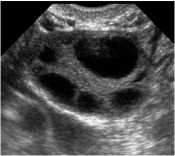
A woman has two almond-shaped and sized ovaries (one each side of the uterus). They take turns each monthly cycle to produce and develop eggs (ova) for fertilization.
The egg journey begins in an ovarian follicle. As many as a dozen follicles, which are egg-containing, ¼-1" diameter cyst-like sacs filled with fluid and hormones (mostly estrogen), start to ripen within an ovary during the first 14 days of the menstrual cycle (which begins day 1 of the monthly period). One or two of these follicles grow stronger than the others, producing and maturing an egg. When ovulation is triggered by a surge in LUTEINIZING HORMONE (LH), the dominant follicle ruptures, releasing its egg into the fallopian tube en route to the uterus, where either the egg is fertilized by a sperm within 24 hours, or it dies.
The now empty follicle egg sac in the ovary becomes a corpus luteum, producing and secreting ESTRADIOL and PROGESTERONE to prepare and provide support for a possible pregnancy. PROGESTERONE is produced from yellow, fatty cholesterol in the corpus luteum, which is Latin for "yellow body". It's pro-gestational functions include:
Stimulate secretion of immune system Th2 and reduce secretion of Th1 cytokines. To prevent mother's immune system from responding to fetal antigens and rejecting the newly arrived "foreign body" :)
Under the influence of HUMAN CHORIONIC GONADOTROPIN (hCG ) from a developing embryo - the corpus luteum ovarian granulosa cells produce large amounts (25-50 mg/day) of PROGESTERONE and smaller amounts (0.5mg/day) of ESTRADIOL) crucial for the first 10 weeks of gestation (counted from day 1 of last mentrual period) Csapo, 1973, at which time the placenta is usually able to produce sufficient PROGESTERONE to support the pregnancy. Insufficient PROGESTERONE at this so-called luteal phase can prevent conception or cause miscarriage, which can be remedied by providing supplemental PROGESTERONE
Conception Problems or Miscarriage related to luteal phase deficiency (LPD)
The fertilized egg undergoes rapid cell division and implants on the prepared uterine wall 5-6 days after ovulation. hCG must appear 4 days after ovulation to rescue the Corpus luteum from regression. Corpus luteum has a negligible role in 2nd and 3rd trimesters.
At term gestation,the placenta produces about 250 mg PROGESTERONE / day and PROGESTERONE levels range from 100-200 ng/ml.
Without any hCG influence from an embryo, then about 10 days after ovulation, the corpus luteum usually disintegrates (via a process called luteolysis). Next, the uterine lining is shed (seen as menstrual bleeding),
Folate deficiency in expectant mother can produce a neural tube defect (NTD) in her fetus at around 3 weeks after conception
 A neural tube defect (NTD) is the most common birth defect - occurs in ~ 1 in
1,000 U.S. live births results from a folate deficiency
affecting the neural tube in the developing fetus. The top part of the neural
tube forms the baby's brain and the bottom part unfolds to become the baby's
spinal column.An opening in the spinal cord or brain occurs very early in human
development and normally fuses to form the neural tube around the 3rd week of
pregnancy. An NTD develops when the neural tube does not close completely, resulting
in serious brain and spinal problems. NTDS include: anencephaly, encephaloceles,
hydranencephaly, iniencephaly, schizencephaly, and
spina bifida..
A neural tube defect (NTD) is the most common birth defect - occurs in ~ 1 in
1,000 U.S. live births results from a folate deficiency
affecting the neural tube in the developing fetus. The top part of the neural
tube forms the baby's brain and the bottom part unfolds to become the baby's
spinal column.An opening in the spinal cord or brain occurs very early in human
development and normally fuses to form the neural tube around the 3rd week of
pregnancy. An NTD develops when the neural tube does not close completely, resulting
in serious brain and spinal problems. NTDS include: anencephaly, encephaloceles,
hydranencephaly, iniencephaly, schizencephaly, and
spina bifida..If pregnancy is a possibility, ensure you have adequate folate levels. Every woman who has any chance at all of becoming pregnant should:
Neutrophilic Hypersegmentation Index (NHI) test for folate status. If you are planning or have any chance of becoming pregnant,this inexpensive blood test can confirm your folate levels. With a low folate test result, a woman should immediately have a series of folate injections; For anyone else, ensure your diet contains sufficient folate.
For details on folate and the NHI test, see:
Avoiding fluoride reduces anemia, pre-term and low-weight babies
"Anemic pregnant women living in India, whose urine contained 1 mg/L fluoride or more, were separated into two groups. The experimental group avoided fluoride in water, food and other sources ...
Results reveal that anemia was reduced and pre-term and low-birth-weight babies were considerably fewer in the fluoride-avoidance group."
For information on the many other toxic affects of fluoride and the fraudulent studies used to support its addition to community drinking water, see:
Fluoride -Mega Health Fraud / Cover-up

In 1801, Erasmus Darwin (Charles Darwin's grandfather) gave us some wise insight on this subject:
"Another thing very injurious to the child, is the tying and cutting of the navel string too soon; which should always be left till the child has not only repeatedly breathed but till all pulsation in the cord ceases. As otherwise the child is much weaker than it ought to be, a portion of the blood being left in the placenta, which ought to have been in the child."

Cutting the Cord - When a baby is born, one of the first procedures
performed is the clamping and cutting of the umbilical cord. A newborn's lungs are
in a "compacted state" whilst still in the womb, however, when the infant
is born, the placenta and cord pulse for up to 20 minutes, delivering a burst of
blood volume to the infant's system, necessary for the lungs to expand.
Unfortunately, many hospitals and doctors are clamping the umbilical
cord too soon, often within one minute of birth. Since they
believe it will reduce the mother's risk of excess bleeding and the baby's risk
of jaundice. Often cords are also clamped early to collect cord blood and cord stem
cells to be used for medical and commercial purposes.
Research is revealing that clamping the umbilical cord before two or three
full minutes have elapsed, robs your baby of much-needed blood and oxygen.
Without the burst of blood from the placenta, the infant's blood
pressure drops as its lungs fail to open as they should, creating a chain reaction
of effects that can include brain and lung damage. One of the primary arguments
for delaying cord clamping has to do with the way a baby breathes just before and
after being born.
Dr. Mercola explains a baby's First Breaths in Detail.
From his article "Are Doctors Causing Infant Brain Damage by Clamping
the Umbilical Cord Prematurely?
"Before birth, the baby's lungs are filled with fluid and very little blood flows
through them; the child receives oxygen from its mother through the placenta and
cord. This placental oxygen supply continues after the child is born until the lungs
are working and supplying oxygen -- that is, when they are filled with air and all
the blood from the right side of the heart is flowing through them.
After birth, when the child is crying and pink, the cord vessels clamp themselves.
During this interval between birth and natural clamping, blood is transfused from
the placenta to establish blood flow through the baby's lungs. The natural process
protects the baby's brain by providing a continuous oxygen supply from two sources
until the second source is functioning well.
However, according to
George M. Morley, M.B., Ch.
B., FACOG, immediate cord
clamping at birth instantly cuts off the placental oxygen supply and the baby remains
asphyxiated until the lungs function. Blood, which normally would have been transfused
to establish the child's lung circulation, remains clamped in the placenta, and
the child diverts blood from all other organs to fill the lung blood vessels.
While most full-term babies have enough blood to establish lung function and prevent
brain damage, the process often leaves them pale and weak. For premature babies,
the process can be even more devastating. And no matter what, immediate cord clamping
will cause some degree of asphyxia and loss of blood volume, because it:
Possible Problems resulting from Premature Cord Clamping. Premature clamping of the umbilical cord increases the baby's risk of brain hemorrhage and breathing problems. It has been implicated as a contributing factor in:
Long and short, there is no one tried and true method that will relieve everyone's case of morning sickness. However, here are some ideas to try that have worked for others going through the same ordeal:
Ginger Tea Recipe |
Bring the water to a boil in a saucepan. Once it is boiling, add the ginger. Cover it and reduce to a simmer for 15-20 minutes. Strain the tea. Add honey or sugar and lemon to taste. |

Accupoint12
Vitamin C and Vitamin K stimulate detoxifying enzymes in the liver. Vitamins B6 and B12 also help the liver to perform optimally.
One to three percent of pregnant women suffer from an EXCESSIVE amount of nausea and vomiting that interfere with nutrition and hydration. You should consult a qualified medical professional if you are vomiting more than three times a day, are unable to retain any fluids you drink, and are progressively losing weight. HG can be devastating for the mother and detrimental to the baby when the mother is unable to keep anything down and has to be hospitalized for intravenous feeding.
Check your own symptoms against this list as a general indication you are dealing with HG:
Severe and persistent vomiting
Dehydration - signs of dehydration listed below:
Used for HG, many women have found prescription Zofran (Ondansetron hydrochloride) effective at helping them stay nourished and hydrated
Zofran Safety?
Possible Side Effects of Zofran
(official Zofran site: http://us.gsk.com/products/assets/us_zofran_tablets.pdf)
Precautions for Taking Zofran
Save Money BY Buying Generic Zofran. Zofran (Ondansetron hydrochloride) is mega-expensive (~$900 for 30 tablets). Many insurance companies will not cover the cost of Zofran. Ask your doctor for the generic brand of ondansetron, which is much cheaper.
Getting sore, cracked nipples is a common problem for nursing mothers -The following tactics have helped many mothers avoid suffering from the pain of sore nipples.

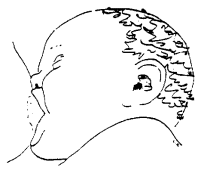
The baby should be a little bit up from horizontal - and turned so that his / her chest, belly and thighs are against you with a slight tilt so the baby can look at you. You can use a pillow to help support him or her in this position. The baby should approach the breast with the head just slightly tilted backwards, which results in the nipple automatically pointing to the roof of the baby's mouth.
Ensure a good "Latch on"
Expose your nipples to full sun for 30 minutes / day

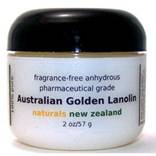
Preferably 100% pure, anhydrous, fragrance-free, pharmaceutical grade lanolin (extracted from sheep's wool). A small amount goes a long way. Gently rub on the nipples between feeds. Wipe off any excess lanolin remaining just before feeding.
Example: Australian Lanolin for Sale at Amazon.com
Some other good brands:Pur-LanTM or LansinohTM
Mix 1 tsp. salt in 1 cup of warm water in a small bowl. Soak the sore nipple(s) in this solution for 5-10 minutes and then allow to air-dry.

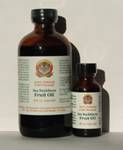
Sea buckthorn oil is the MVP for healing skin problems. For most benefit, use organic, cold-pressed oil from the sea buckthorn berry. It costs around $25 for 2oz., but that should be more than enough to deal with the problem. This treatment is also excellent if the soreness is due to thrush, where the baby has a white fungus lining the inside of the mouth. Rub the oil on your nipples and inside the baby's mouth. It's perfectly safe - some people take this oil as a health-supplement.
Sea buckthorn oil at amazon.com
When airing is not possible, plastic dome-shaped breast shells(not nipple shields) can be worn to protect your nipples from rubbing on your clothing. Nursing pads keep moisture against the nipple and tend to stick to damaged nipples. If you leak a lot you can wear the pad over the breast shell
A teat is placed over the nipple to enable the baby to suck on the breast without direct contact. However, most mothers have NOT found these to be very helpful.Also, they tend to reduce the milk supply, and once the baby is used to it, he/she may not want to return to the breast.
Comfrey ointment. Softens and strengthens nipples. Soothes /heals sensitive nipples.
Yarrow leaf poultices / yarrow infused oil. Provide almost instantaneous pain relief and heal cracked nipples rapidly.
PPD is a mood disorder affecting ~10-15% of women after childbirth. Experiencing some depression is not uncommon, but usually doesn't last for > 2 weeks. Symptoms of PPD usually begin between 2 weeks and a month after childbirth. The symptoms involve emotional, behavioral changes and differences in brain activity from women who are not postpartum.
The cause may may be related to Estradiol and progesterone levels that increase in pregnancy then fall drastically postpartum within 24 hours. As estradiol falls, so does the neurotransmitter Serotonin, which regulates mood. Obviosly, the many lifestyle changes, overwhelming stresses, lack of sleep, financial worries that arrive with a new baby are also factors that increase anxiety and depression.
Dr. Dalton, author of "Guide to Progesterone for Post-Natal Depression", states that:
"At delivery of the baby, the placenta (which produces Progesterone) is also delivered, and there is a sudden alteration in the levels of all hormones. The new mother must abruptly adjust to the complete absence of Progesterone after nine months of continuous and plentiful supply. It is suggested that some women find this alteration of Progesterone difficult to tolerate and react with the development of postnatal depression."
NATURAL (bio-identical), not synthetic, Progesterone supplementation may prevent anxiety and other postnatal symptoms and may even be combined with other prescribed medication. Synthetic versions of allopregnanolone have been utilized with some success. Progesterone is being studied as a potential treatment of PPD, but as yet no dose hase been determined, and an insufficient dose may exacerbate the problem.
Borrelli F et al (2005) Effectiveness and safety of ginger in the treatment of pregnancy-induced nausea and vomiting. Obstet Gynecol;105:849-56.
Csapo AL, Pulkkinen MO, Wiest WG. (Mar 1973) Effects of luteectomy and progesterone replacement in early pregnant patients. Am J Obstet Gynecol. 115:759. PubMed
Li, F.; Watkins, D.; Rosenblatt, D. S. (2009). "Vitamin B-12 and birth defects". Molecular Genetics and Metabolism 98(1-2): 166-172.
Molloy, A. M.; Kirke, P. N.; Troendle, J. F.; Burke, H.; Sutton, M.; Brody, L. C.; Scott, JM; Mills, JL (2009). "Maternal Vitamin B-12 Status and Risk of Neural Tube Defects in a Population With High Neural Tube Defect Prevalence and No Folic Acid Fortification. [Article]". Pediatrics 123(3): 917-923.
Pratap Kumar, Navneet Magon. (2012) Hormones in Pregnancy Niger Med. J. Oct-Dec; 53(4): 179-183 PubMed
Signorello LB et al, (1996) Saturated fat intake and the risk of severe hyperemesis gravidarum. Am J Epidemiol;143 (11 Suppl):S25 [abstract # 97]