Health Happening
The "No-Brainers" for Physical and Mental Health:
20 amino acids (AAs) are required to make protein and our bodies comprise many protein components ( muscles, enzymes, antibodies and some hormones and neurotransmitters to name a few). The body can make all but 9 of these amino acids, which have to be eaten . All 20 AAs are present in protein foods (i.e. meat, eggs, fish, and dairy products), but if abstaining from animal / fish products, these 9 must be obtained from non-proteinous foods, such as vegetables, nuts and legumes, which requires due diligence to ensure you are choosing the right foods containing the 9 AAs in sufficient quantities.
Amino acids - Building blocks of protein
A sulfur deficiency affects:
Researchers in France concluded that LOW intake of sulfur amino acids by vegetarians and vegans raises homocysteine levels (a known cause of atherosclerosis leading to heart attack and stroke) and increases their risk of ischemic cardiovascular diseases.
Ingenbleek Y, Mc Culley KS, Vegetarianism produces subclinical malnutrition, hyperhomocysteinemia and atherogenesis. Nutrition 2011 Aug 26 [Epub ahead of print]
Buy birds which ran outside on pasture and ate organic feed. Meat from such chickens is firmer and leaner compared to that from commercialized, cooped up, non-organic grain-fed chickens. Chickens obtain worms and bugs from the ground, which enhance the omega-3 content of their meat (and eggs).
A so called "Free-range chicken" didn't necessarily range outside. It had access to the outside, but did not necessarily go outside, especially when its feed is inside.
Pastured / Organic grain-fed chickens Contain Significant Omega-3 Fat. Having an Omega-6 : Omega-3 ratio of 2 or 3 : 1, compared to 20 to 1 in commercial grain-fed chicken.
Fat content of chicken is higher than you may think. A chicken thigh or leg with skin has 56% of its calories from fat, and has 47% even without the skin -so skin doesn't actually make that much difference! Compare this to a T-bone steak having 42% of its calories from fat.
If you choose to eat pork, bacon or ham:
Choose beef from cattle fed organic grass. The 4-chambered stomach of a cow was designed to eat grass. Beef from grass-fed cattle is:
Concentrated Animal Feeding Operations (CAFO's)
NOTE: Meat from organically fed animals/birds does not necessarily mean that they were raised on grass - which is a common misunderstanding; however, at least these animals were not exposed to antibiotics, growth hormones, and pesticide-tainted grains.
Cows' stomachs are designed to eat grass - and not the typical grain-based diet of most U.S. commercial operations today. This diet is RICH in inflammatory omega-6 fat at and POOR in anti-inflammatory omega-3 fat content, contributing to the seriously detrimental health consequences of this imbalance both in the livestock themselves and those who eat their meat!
Where to Find Meat from Animals fed Organic grass ? - it may be possible to find locally, and it can also be obtained on the internet. The cost for this quality beef is about double that of CAFO sources, which are feeding animals government-subsidized corn (i.e. you're really paying more for the meat in indirect ways -not only through your taxes, but via other hidden costs. E.g. Ecological damage from using fossil-fuel based fertilizers, and also their damaging run-off from grain fields pollutes rivers and seas E.g. Down the Mississippi River into the Gulf of Mexico, where it is destroying algae - a main source of food for smaller fish, which are themselves the food source for bigger fish).
To help you find organic grass-fed meat in your local area:
Maybe share the beef from a grass fed cow with others -To get an idea of what you're dealing with - One quarter of a cow weighs ~ 150 pounds and fills about two freezer shelves.
Grass-fed beef has a different flavor and is usually a little tougher than corn-fed beef - ideally, it needs to be tenderized prior to cooking. It also has less marbling fat.
Lamb is usually from sheep that have eaten grass and is an excellent choice for dinner - don't forget the mint sauce! :)
Which animals / birds are good to eat ?
- Leviticus 11:1-3
Eat meat from animals that:
(1) Have split hoofs
(2) Ate grass (i.e. they chewed the cud with their 4-chambered stomachs).
For proof that God knew what he was doing when he told the Israelites to limit their meat to the above two sources:
(See Evidence of Toxicity in "Unclean" Creatures)
| Animals | ||
|---|---|---|
| Beef | Sheep (Lamb, Mutton) | Deer (Venison) |
| Ox | Bison (Buffalo) | Goat |
| Moose | Antelope | Gazelle |
| Caribou | Giraffe | Elk |
| Ibex | Llama | Reindeer (sorry Rudolf!) |
| NOT Pig (pork)or rabbit | ||
Choose non-carrion-eating birds, or animals that chewed the cud and have cloven hooves
| Birds | ||
|---|---|---|
| (None of these birds are scavengers) | ||
| Chicken | Turkey | Goose |
| Duck | Pigeon | Quail |
| Swan | Guinea fowl | Ptarmigan (I've never heard of it either!) |
| Dove | Grouse | Partridge |
| Pheasant | Peahen | Sage hen |
| Teal | Most song birds | |
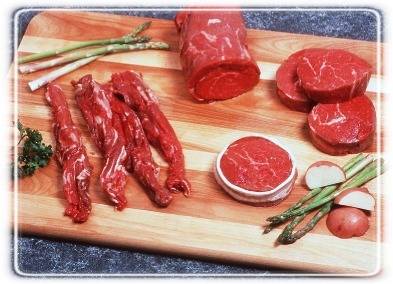
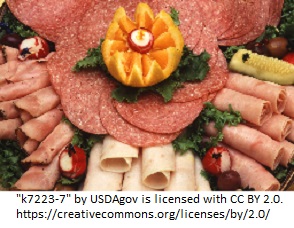
What are processed meats? Those meats preserved by smoking, curing, salting, or by the addition of chemical preservatives; include bacon, ham, pastrami, salami, pepperoni, hot dogs, deli / lunch meats, sausages, hamburgers (if they have been preserved with salt or chemical additives) and meats used in canned foods, on pizzas and in packaged products.
Purpose of curing meat
Health concerns of processed meats
"There is strong evidence that ... processed meats are causes of bowel cancer, and that there is no amount of processed meat that can be confidently shown not to increase risk ... Try to avoid processed meats such as bacon, ham, salami, corned beef and some sausages." WCRF/AICR Expert Report -- Food, Nutrition, Physical Activity and the Prevention of Cancer: a Global Perspective
However, there is no substantial evidence that the nitrites or nitrates in cured meat are harmful when eaten in moderate amounts. Today meat is usually cured with sodium nitrite (or sometimes potassium nitrate, of which these nitrates convert to nitrites in a long-term cure) and also sodium chloride, sugar and other flavors.
Nitrites combine with by-products of protein (amines in the stomach) -however, a 154# person would have to eat >18 pounds of cured meat to hit toxicity level. It is estimated that 10% of human exposure to nitrites in the GI tract comes from cured meats and 90% comes from vegetables and other sources (E.g. from fertilizers) and indeed nitrite toxicity has been present in infants fed vegetables with a high nitrate level.
Nitrates in cured bacon are heated to temps in the 600°F (315°C) range. E.g. when bacon is crisped (however, most meats are cooked at lower temps.) - Today's typicalshort-term cures (a few hours), do not need to use nitrates. The USDA now requires bacon processors to add antioxidants, such as vitamins C and E, which help promote the formation of harmless nitric oxide instead of potentially harmful nitrosamines. Bacon manufacturers are under a USDA surveillance program whereby bacon is sampled, cooked, and tested for nitrosamines. Levels above a certain maximum amount are not permitted.
Nitrite in Meat -Univ. of Minnesota rev. 1992
To be safe when consuming cured meats. You can take a 500mg vitamin C dose to curtail formation of nitrosamines
Smoked Meats. Smoking meat is a method used probably since soon after man's discovery of fire to either preserve meat or to impart the much desired flavor of the smoke from certain woods or charcoal; if meat is salt-cured, the additional smoking process is otherwise unnecessary.
- Frequent consumption of smoked meats or fish is correlated with intestinal cancer (especially colectoral and stomach cancers):
Carcinogenic polycyclic aromatic hydrocarbons (PAHs) - produced from the incomplete combustion of the fuel being burnt.
Charring
Fritz and Soós (1980). "Smoked food and cancer." Bibl Nutr Dieta. (29):57-64.
- Amount of carcinogens in smoked foods varies greatly. Depends on kind of smoked food
Gomaa et al (1993). "Polycyclic aromatic hydrocarbons in smoked food products and commercial liquid smoke flavourings." Food Addit Contam. 10(5): 503-21.
- This author's conclusion is that moderate consumption of smoked foods is probably OK (provided it isn't laden with other preservatives)
Cut off the covering fat of meat and don't eat blood. Covering fat and blood store and carry toxins. This takes "Blood (Black) pudding" off the menu! Covering fat is composed of more harmful types of saturated fats than marbling fat, which is good for you in moderate quantities.
Marinades lower cancer-causing compounds in meat prior to cooking. Cooking food increases its levels of potentially tumor causing compounds called heterocyclic amines (HA's). Frying and grilling meat is particularly dangerous, because the intense heat turns sugars and amino acids into HAs.
- Proverbs 23:20
Too much protein overburdens the digestive system and produces excessive amounts of acid. This can increase oxidative stress and deplete alkalizing minerals in the body needed for various functions, including bone strength.
Excessive meat consumption can increase body's homocysteine levels, which can induce oxidative stress and a low-level chronic inflammatory response in the absence of antioxidants. The amino acid homocysteine is formed from the metabolism of the essential amino acid, methionine, found in meats and dairy products. The homocysteine produced can undergo:
If either of these pathways are impaired (E.g. due to a deficiency of B6, B12, folate, betaine), then plasma fasting homocysteine concentrations are increased, significantly so in the remethylation pathway.
To understand the significance of ongoing oxidative stress causing a low-level chronic inflammatory response:
Chronic Low-level Inflammation -"A common factor in most health problems"
80% of U.S. beef cows are raised in feed lots, where they have no choice but to eat a grain-based diet(typically wheat, corn /maize, rice, barley, and also soybean and cane sugar). Since their 4-chambered stomachs were designed to process grass not grain, the cows are frequently sick and bloated, and usually develop liver disease, which would eventually kill them if they were not fattened in accelerated time.
CAFO cows are given antibiotics to promote growth in livestock
Consuming antibiotic-laden beef having detrimental effects on health:
How do antiobiotics increase the rate and efficiency of weight gain in healthy livestock ? The presence of antibiotics likely changes the composition of the gut flora to favour growth. Debate continues as to how that gut flora are changed; change may simply be a reduction in numbers and/or a change in species composition. For example, a low, continuous dose of antibiotic may:
Hormone Growth Promotants (HGPs) are carcinogenic
Although the U.S. have approved the use of HGPs, many other countries have banned them. The E.U. has banned importation of American and Canadian beef raised with growth hormones because studies indicate thatthey are carcinogenic. Hormones used in beef cattle include the male hormone Testosterone (and its synthetic equivalent trenbolone acetate), and the female hormone progesterone (and 3 of its synthetic derivatives).
HGPs affect ecology. Hormones are not only present in the beef, but also end up in farm run-off and can flow into nearby rivers and streams -ending up in underground aquifers and so in our drinking water.An EPA fresh-water study in Deluth, MN found that fish exposed to trenbolone in water produced a general pattern where female fish were slightly masculinized and male fish slightly feminized.This raises concerns that these hormones might be a factor in the rising incidence of premature development in girls. Lemonick, MD (2003)
The cows' grain diet yields a high proportion of Omega-6 fat, as opposed to providing us a natural source of Omega-3 from a grass diet. Thus, eating grain fed beef contributes to an imbalance of the important Omega-6 to Omega-3 ratio.
Lemonick, MD,(Dec 11, 2003) "Teens before Their Time",TIME Magazine, Oct.30, 2000 and lower sperm counts in men Cone M, "Changes in Fish Tied to Feedlots.", LA Times, .
Ye W, Xu P, Zhong S, Threlfall WR, Frasure C, Feng E, Li H, Lin SH, Liu JY, Lin YC. ( Nov;1 2010) Serum harvested from heifers one month post-zeranol implantation stimulates MCF-7 breast cancer cell growth. Exp Ther Med. (6):963-968. doi: 10.3892/etm.2010.155. Epub 2010 Sep 29. PMID: 22993626; PMCID: PMC3446733.